

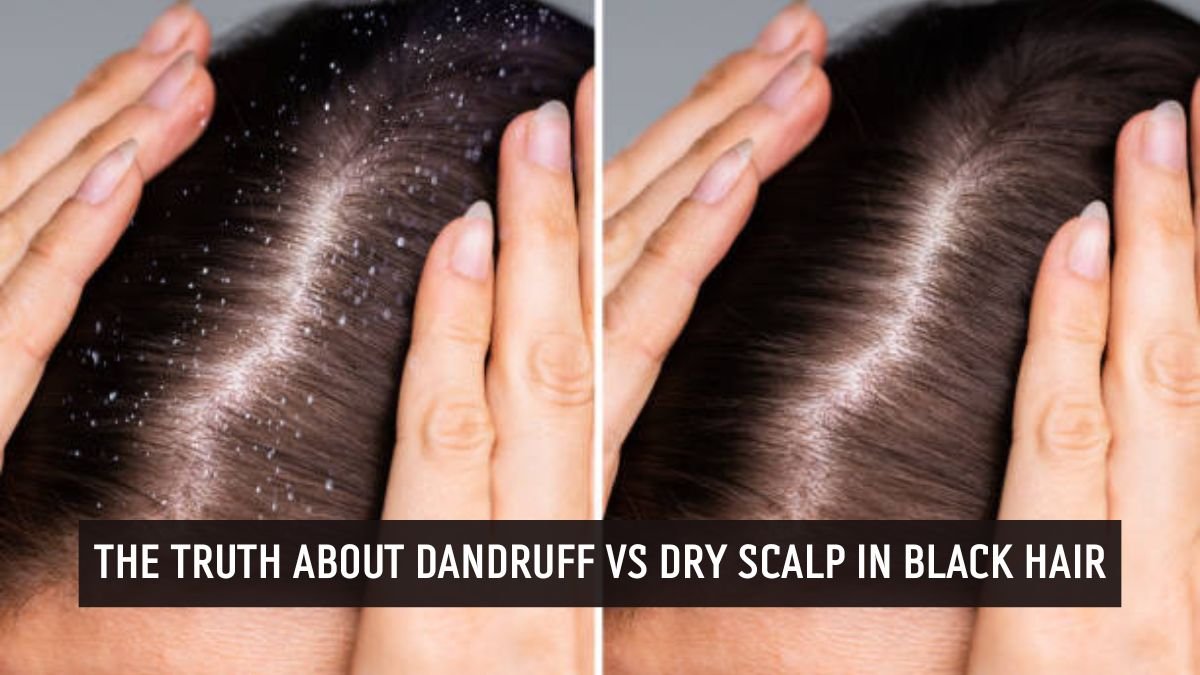
If you have textured, curly, coily, or natural hair and notice flakes on your scalp, you may immediately assume it’s dandruff. But in many cases, it could actually be dry scalp. Understanding the difference between dandruff vs dry scalp black hair is essential because the treatments are completely different. Using the wrong products can make the problem worse instead of better.
In this complete guide, we’ll break down the real causes, symptoms, and treatments — specifically for Black hair and textured hair types. By the end, you’ll know exactly what you’re dealing with and how to fix it properly.
Why This Topic Matters for Black Hair
Black hair, especially curly and coily textures (Type 3 and Type 4), naturally tends to be drier than straight hair. The shape of the hair strand makes it harder for natural scalp oils to travel down the hair shaft. As a result:
The scalp may become dry easily
Moisture loss happens faster
Flaking is more common
Product buildup can accumulate quickly
Because dryness is already common, many people confuse dry scalp with dandruff — but they are not the same condition.
Dandruff vs Dry Scalp Black Hair: What’s the Real Difference?
Let’s simplify it.
Feature Dandruff Dry Scalp
Cause Fungal overgrowth (Malassezia) Lack of moisture
Flakes Oily, yellowish, larger Small, white, dry
Scalp Feel Itchy, greasy, inflamed Tight, dry, irritated
Oil Level Often oily Usually dry
Treatment Anti-dandruff shampoo Moisturizing treatments
The key difference:
Dandruff is a scalp condition.
Dry scalp is a moisture issue.
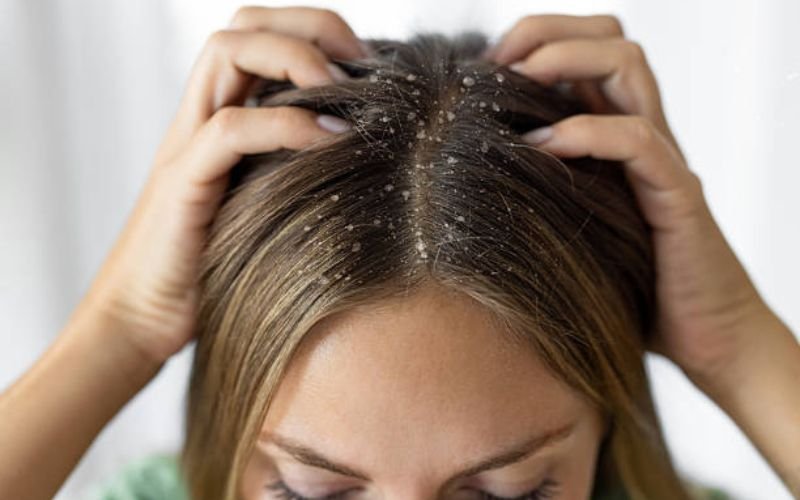
What Is Dandruff?
Dandruff typically occurs due to an excessive growth of a yeast-like fungus known as Malassezia on the scalp. This fungus feeds on scalp oils. When it grows excessively, it can cause:
- Oily flakes
- Scalp irritation
- Persistent itching
- Redness in severe cases
For individuals with Black hair, managing dandruff can be challenging since frequent washing — often recommended to control flakes — can strip moisture and leave the hair shaft dry.
What Is Dry Scalp?
Dry scalp happens when your scalp lacks moisture. It is not caused by fungus. Instead, it can be triggered by:
- Cold weather
- Harsh shampoos
- Overwashing
- Hot water
- Lack of hydration
- Low humidity
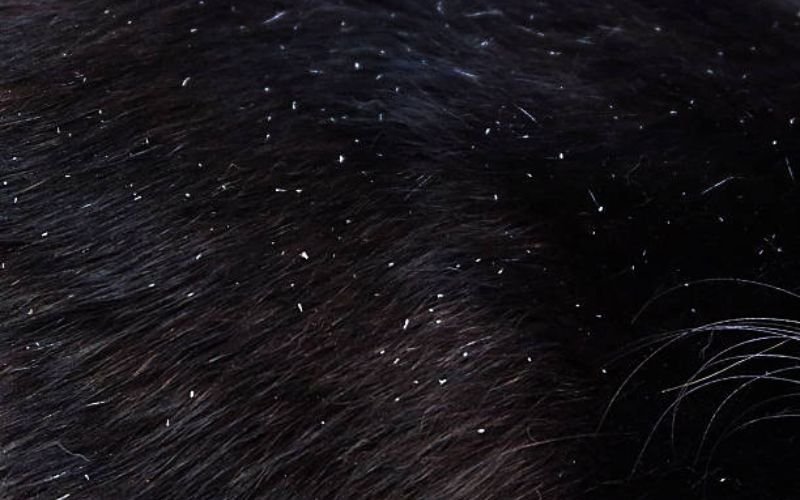
Dry scalp flakes are usually:
- Smaller
- Powdery
- White
- Light and easy to brush off
The scalp can feel tense or mildly irritated, yet it usually lacks any oily or greasy sensation.
Why Black Hair Is More Prone to Dry Scalp
Black hair textures often experience dryness because:
- Natural oils don’t travel easily down curls.
- Protective styles may limit scalp access to moisture.
- Heavy styling products can block hydration.
- Washing frequency is usually lower to preserve moisture.
This is why accurately determining the underlying cause becomes especially important.
How to Determine Whether It’s Dandruff or Dry Scalp
Here’s a quick self-check guide:
You likely have dandruff if:
- Your flakes are yellowish and oily
- Your scalp feels greasy
- You experience constant itching
- Flakes return quickly after washing
You likely have dry scalp if:
- Flakes are small and powdery
- Your scalp feels tight after washing
- Cold weather makes it worse
- Moisturizing helps reduce flakes
Correct identification saves you from wasting money on the wrong products.
Best Treatments for Dandruff in Black Hair
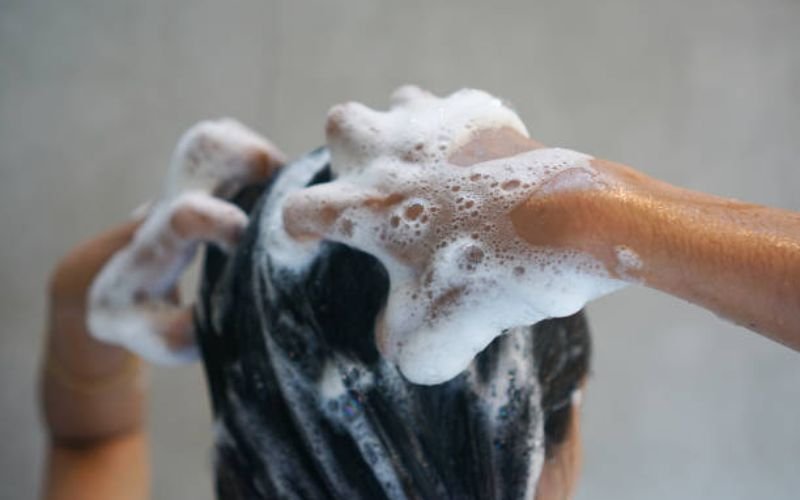
If it turns out to be dandruff, prioritize addressing the fungal imbalance while still preserving your hair’s natural moisture.
1. Use a Medicated Shampoo (1–2 times weekly)
Look for ingredients like:
- Ketoconazole
- Zinc pyrithione
- Selenium sulfide
Massage it onto the scalp and allow it to remain for about five minutes before thoroughly rinsing it out.
2. Follow with Deep Conditioning
Since medicated shampoos may strip moisture, be sure to follow up with a deep conditioning treatment.
3. Avoid Heavy Oils on the Scalp
Oils can feed the fungus and worsen dandruff.
4. Keep Your Scalp Clean
Product buildup can increase irritation. Clarify gently when needed.
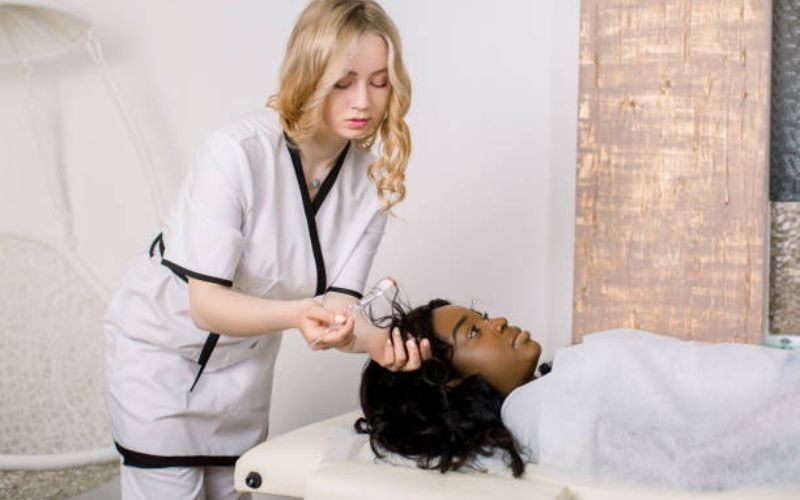
Best Treatments for Dry Scalp in Black Hair
If the issue is a dry scalp, the key solution is hydration rather than medicinal treatment.
1. Oil Massage
Use:
- Jojoba oil
- Sweet almond oil
- Argan oil
Massage gently 2–3 times per week.
2. Aloe Vera Treatment
Gently spread fresh aloe vera gel onto the scalp to provide moisture and a calming effect.
3. Switch to a Moisturizing Shampoo
Choose sulfate-free formulas that preserve natural oils.
4. Reduce Hot Water
Hot showers strip moisture from the scalp.
5. Increase Hydration
Increase your water intake and run a humidifier throughout the winter months.
Common Mistakes People Make
❌ Using anti-dandruff shampoo for dry scalp
❌ Applying heavy grease on dandruff
❌ Scratching aggressively
❌ Ignoring product buildup
❌ Overwashing textured hair
These mistakes can worsen the problem.
Can You Have Both?
Yes, it’s possible.
Some people with Black hair may experience:
- Dry hair strands
- Oily scalp
- Fungal dandruff combined with dehydration
In such cases, a balanced approach is needed:
- Treat the scalp condition first
- Restore moisture gradually
- Avoid overloading with heavy oils

Protective Styles and Scalp Health
Braids, twists, wigs, and weaves are widely used protective styles, yet they can:
- Trap sweat
- Prevent proper cleansing
- Limit scalp airflow
If wearing protective styles:
- Cleanse your scalp regularly
- Use lightweight scalp serums
- Avoid heavy buildup products
Healthy scalp equals healthy growth.
Diet and Lifestyle Impact
Your scalp reflects your internal health.
Include:
- Omega-3 fatty acids
- Zinc
- Iron
- B vitamins
Stress and inadequate sleep can also contribute to an imbalance in scalp health.
When to See a Dermatologist
Seek professional help if you notice:
- Severe redness
- Thick crusting
- Hair thinning
- Persistent inflammation
It could indicate seborrheic dermatitis or another scalp issue that needs professional medical attention.
Final Thoughts: The Truth Revealed
Grasping the real difference between dandruff and dry scalp in Black hair can transform your entire hair care routine.
Remember:
Dandruff = fungal imbalance
Dry scalp = lack of moisture
They may look similar, but they require very different solutions.
For Black hair, balance is everything. Focus on:
- Gentle cleansing
- Proper scalp hydration
- Avoiding heavy buildup
- Choosing products designed for textured hair
By addressing the root cause rather than guessing, flakes diminish, itching subsides, and your scalp restores its health.
A well-nourished scalp forms the foundation for strong, vibrant, and flourishing hair.